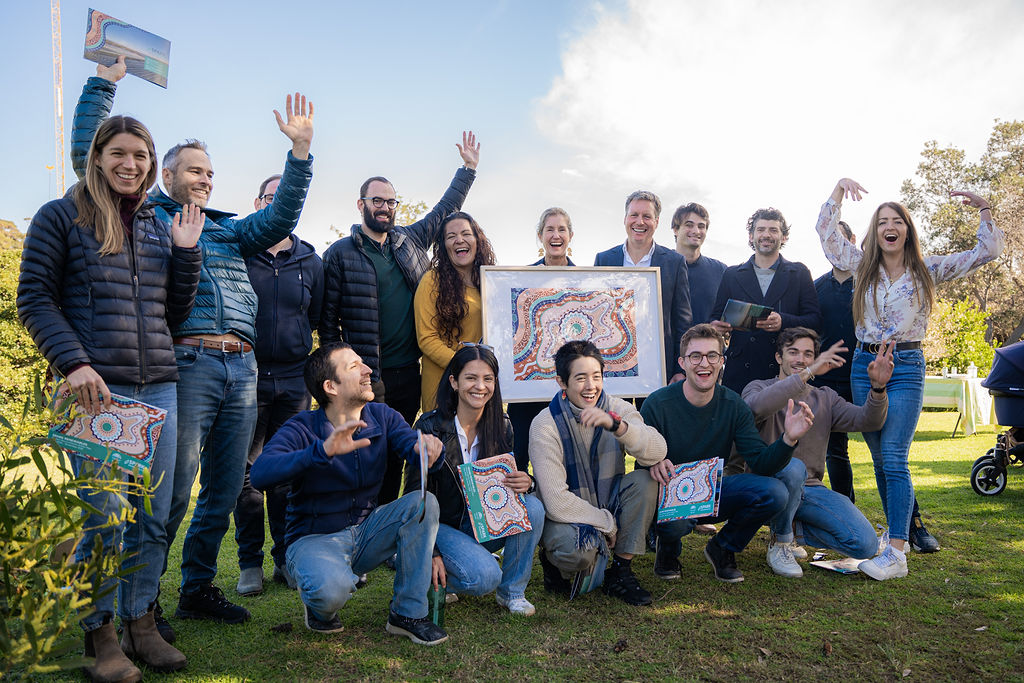
Spark Renewables, a leading Australian developer and owner of renewable energy assets, welcomes the announcement that it has been successful with two of its solar-hybrid projects in Tender 7 of the Capacity Investment Scheme (CIS):
Dinawan Solar Hybrid: Stage 2 of the Dinawan Energy Hub project. The project has been awarded access rights and is located in the South West Renewable Energy Zone in New South Wales. The 357 MW Dinawan Wind Farm (Stage 1) was successful in Tender 4 of the CIS. Dinawan Solar Hybrid consists of 300 MW of generation and 1,200 MWh of storage capacity, located halfway between Jerilderie and Coleambally.
Wattle Creek Solar Hybrid: Stage 2 of the Wattle Creek Energy Hub project in partnership with the University of Sydney. It consists of 180 megawatts (MW) of generation and 720 megawatt hours (MWh) of storage capacity, and is located near Marulan in the Southern Highlands of New South Wales.
The CIS is an Australian Government revenue underwriting scheme to accelerate investment in renewable energy generation. Projects tendered via the competitive process are evaluated on their ability to deliver low-cost, reliable power; their track record of community and First Nations engagement; proposed community benefit sharing; and their contribution to regional economic growth and procurement of local content. See Capacity Investment Scheme – DCCEEW.
Mr Anthony Marriner, the Chief Executive Officer of Spark Renewables, said: “Spark Renewables will supply electricity from three separate projects under the Government’s Capacity Investment Scheme, collectively representing 480 MW of solar and 357 MW of wind generation, backed up with 1,920 MWh of battery storage capacity.”
“We are confidently delivering on our goal to develop high-quality projects leading the renewable energy transition in Australia, in a way that prioritises Australian manufacturers and service providers; supports jobs during construction and operations over a project’s lifetime; and meaningfully addresses project impacts on the community and the environment.”
“Spark Renewables will continue to focus on accomplishing project milestones to achieve commercial operations by 2030, as targeted by the Capacity Investment Scheme. We are targeting financial close of the Dinawan Wind Farm (Stage 1) before the end of this year, followed by the Wattle Creek Standalone BESS in early 2027,” said Mr Marriner.
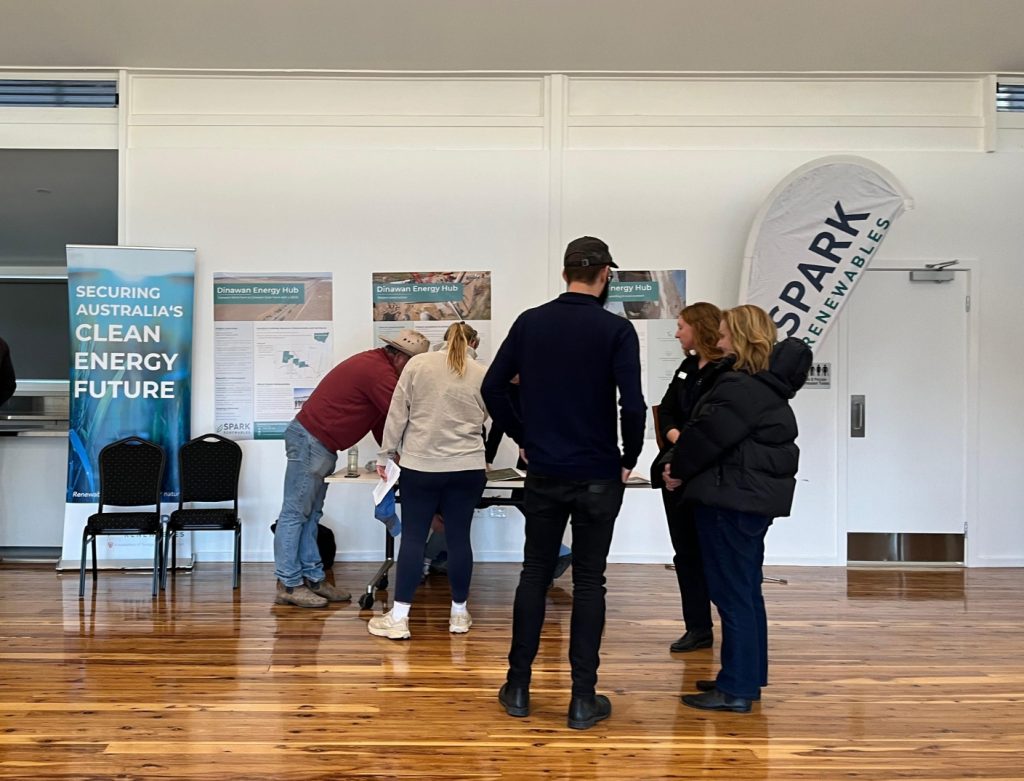
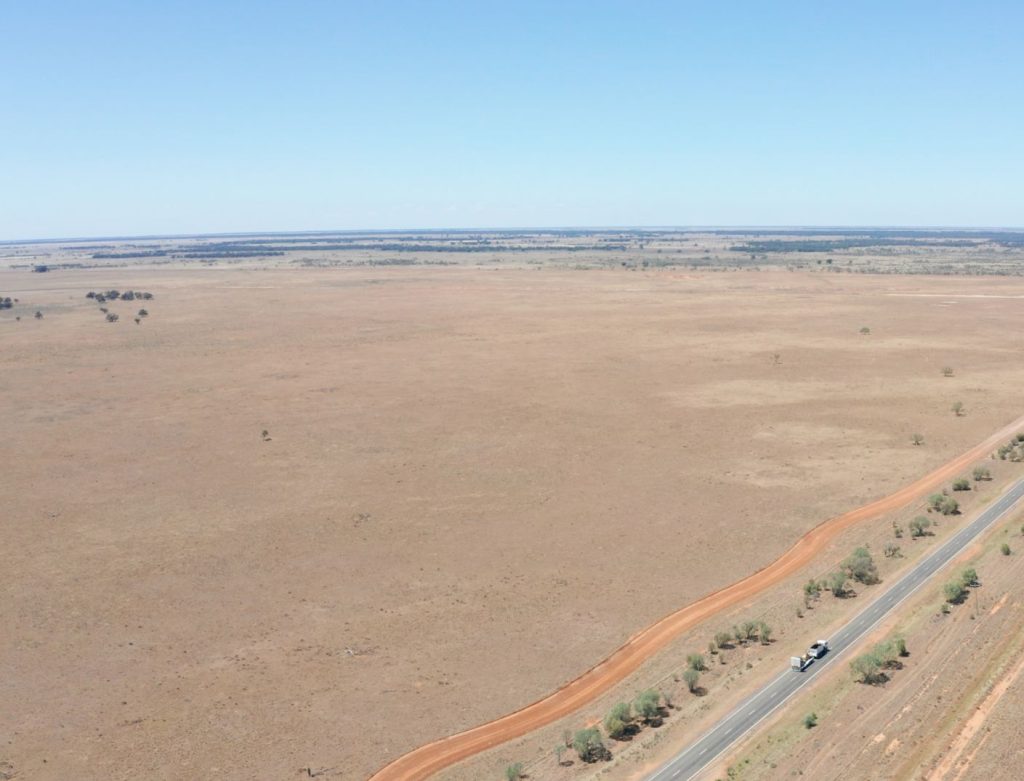
The Dinawan Energy Hub (DEH) is a hybrid renewable energy project consisting of the Dinawan Wind Farm, and the Dinawan Solar Farm, which is accompanied by a battery energy storage system. It is located about halfway between Coleambally and Jerilderie near Transgrid’s Dinawan Substation.
Project components as allocated by EnergyCo under access rights include:
707 MW wind farm (Stages 1 & 2) with 105 wind turbines (up to 250-metre tip height), west of Kidman Way
300 MW solar farm, with 750,000 solar modules installed east and west of Kidman Way
300 MW BESS, providing up to 1,200 MWh of storage
Recent updates
In April 2025, Spark Renewables was awarded access rights for 1,007 MW in the South West Renewable Energy Zone (REZ), which authorises projects to apply to connect to the transmission network infrastructure.
In October 2025, the Dinawan Wind Farm (Stage 1) bid was successful in Tender 4 of the Australian Government’s Capacity Investment Scheme (CIS).
In December 2025, the NSW DPHI recommended conditions of consent for approving the Dinawan Solar Farm Development Application. Speaker registrations for the public meeting in Coleambally close at 12pm. Register to speak through this page.
Community benefit sharing & social commitments
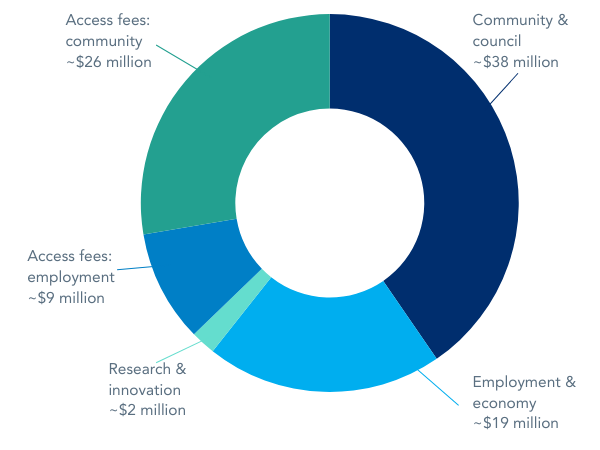
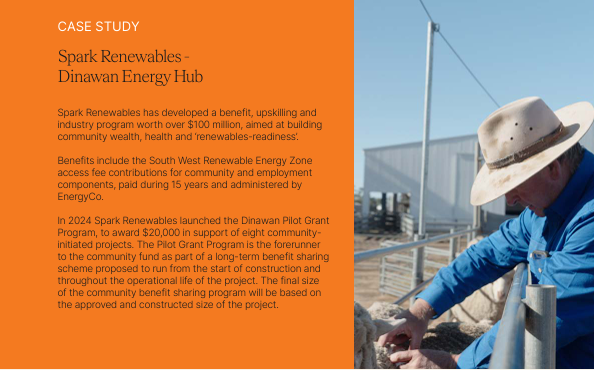
Spark Renewables is committed to creating upskilling, employment and procurement opportunities and co-funding research and innovation programs.
Access fee contributions will be administered by the NSW Energy Corporation (EnergyCo)
Since development of the DEH began, Spark Renewables has contributed $126,700 to local funding and sponsorships, and $35 million of additional South West REZ access fee contributions are expected to be paid over the first 15 years of the project’s lifespan.
Voluntary Planning Agreement
Spark Renewables will enter into a Voluntary Planning Agreement (VPA) with Murrumbidgee Council. For the projects being built under the allocation of access rights – 707 MW for the wind farm and 300 MW for the solar farm – this represents an average of a $1 million payment each year to be shared across:
Council’s Critical Capital Projects (70%)
Community Benefit Fund (15%)
Aboriginal Community Fund (7.5%)
Neighbour Benefit Fund (7.5%), which includes the Dinawan Wind Farm Electricity Rebate Scheme (ERS)
Spark Renewables has launched the ERS as part of the Dinawan Neighbour Benefit Program for eligible households near the Dinawan Wind Farm. Households within 10 km of the wind turbines can receive annual electricity rebates between $2,500 and $10,000 for the wind farm’s 35-year lifespan, based on distance from the nearest wind turbine. Spark Renewables is currently engaging with the local landholders to propose an extended ERS for the Dinawan Solar Farm. Read more here.
Submissions for Dinawan Solar Farm Development Application review by the IPC close on 5 March 2026
Under NSW planning legislation, the Dinawan Wind Farm and Solar Farm are both State Significant Developments and therefore require an assessment by the NSW Government. In response to the Development Application (DA) for Dinawan Solar Farm, the NSW Department of Planning, Housing and Infrastructure (DPHI) has recommended conditions of consent to manage potential impacts on the local area. We expect recommended conditions for the Dinawan Wind Farm to follow in the first quarter of 2026.
You can read the referral letter, assessment report, and recommended conditions of consent on the NSW Independent Planning Commission’s (IPC) website by visiting this page. In line with the IPC’s consultation timeline for Dinawan Solar Farm, written public submissions and registration to speak at the project’s public meeting are open until 17 February 2026 (closing at noon).
27 February 2026: A public meeting will be held at Coleambally Community Hall at 10am. You can pre-register to speak at the event here.
5 March 2026: Submissions for the Dinawan Solar Farm project can be made until 11.59pm.
Expressions of interest open for the Accommodation Village until 16 February 2026
We are seeking partners to design, supply, install and operate an accommodation village to support the construction workforce. We are looking for innovative approaches that will create an outstanding place to live while contributing to the delivery of the DEH. Find out more here.
To see all work packages available for Dinawan Wind Farm (Stage 1), visit the ICN Gateway here.
The NSW Department of Planning, Housing and Infrastructure has recommended conditions of consent for the approval of the Dinawan Solar Farm development application. The Independent Planning Commission will hold a public meeting at the Coleambally Hall at 10am on 27 February 2026. View the full timeline here.
This decision follows several years of studies and consultation with interested and impacted stakeholders, including local councils, landholders, residents, Aboriginal community representatives, and transport, environmental and safety government agencies.
Spark Renewables applied for a permit to deliver a large-scale solar farm (800 MW); and a battery energy storage system (356 MW).
The Department has assessed the Dinawan Solar Farm proposal, including potential impacts on the environment, traffic, farming activities, heritage, and the character and liveability of the local area. Following this assessment, a detailed set of conditions has been recommended to help manage these impacts and protect the interests of the local community.
The recommended conditions of consent require Spark Renewables to:
Manage and minimise noise, dust, and traffic disturbance throughout construction;
Protect ecologically sensitive areas;
Safeguard Aboriginal heritage sites;
Maintain agricultural land capability where possible, including consideration for sheep grazing;
Prepare detailed management plans prior to construction commencing;
Adhere to approved site access points and transport routes for all workers; and
Contribute annual funding for community benefits.
Spark Renewables has committed to avoid all hollow bearing trees that were identified during the ecological studies.
This is a voluntary set of commitments that clean energy developers uphold when planning, building, and operating renewable energy projects. There are more than 50 signatories, representing nearly all major renewable energy developers in Australia.
This is the second year of reporting, and the submissions for this year show the industry continuing to raise the bar for responsible development in regional Australia.
Spark Renewables is proud to be part of an industry that engages meaningfully with local communities and First Nations groups, addresses environmental and agricultural concerns, and works to deliver lasting benefits for landholders and regional communities.
Signatories to the Charter are committed to minimising impacts on quality agricultural land and exploring opportunities for co-existence between renewable energy and farming. The reports highlight a range of locally adapted approaches that support both clean energy generation and agricultural productivity. At Bomen Solar Farm, Spark Renewables is currently supporting a three-year research project led by Charles Sturt University to identify the ideal pasture mix that thrives under solar panels, supports quality grazing land, and reduces fire risk.
The signatories’ submissions reflect a continued commitment to respectful engagement – consulting early and often, remaining sensitive to areas of high biodiversity, cultural and landscape value, and to responsible land stewardship over the lifetime of a project, including waste recycling and decommissioning. This year’s reports demonstrate a more deliberate, science-informed, and locally sensitive approach to managing environmental impacts across construction, operations and at the project end-of-life.
One of our earlier partnerships in this field – with a leading solar panel recycling and resource recovery company PV Industries – is proving successful in finding sustainable end-of-life solutions for solar panels. At their new facility launch last week, the team demonstrated how solar panels can be processed to recover materials such as silver.
Read the summary and view the published reports and over 400 examples showcasing how renewable energy projects are delivering real, often unseen benefits for local communities and the environment across Australia here.
Spark Renewables’ Dinawan Energy Hub project successful in the Capacity Investment Scheme (Tender 4)
Spark Renewables, a leading Australian developer and owner of renewable energy assets, welcomes the success of our flagship Dinawan Energy Hub’s project in Tender 4 of the Capacity Investment Scheme (CIS).
The Minister for Climate Change and Energy, the Hon Chris Bowen, announced earlier today the Australian Government’s support for ‘Dinawan Wind Farm (Stage 1)’, the first stage of the Dinawan Energy Hub proposed halfway between Jerilderie and Coleambally in New South Wales. See $600 million community boost as next wave of renewable projects power ahead.
The 357 MW Dinawan Wind Farm (Stage 1) is part of the 1.3 GW Dinawan Energy Hub, which has recently been awarded access rights in the South West Renewable Energy Zone. It includes a second stage wind farm of 350 MW and a third stage 300 MW solar farm combined with a 300 MW/1,200 MWh battery energy storage system (BESS).
In total, the Dinawan Energy Hub is expected to deliver around 1 GW of new generation capacity to the National Electricity Market along with 300 MW of 4-hour battery storage capability, supporting the energy transition.
The CIS is an Australian Government revenue underwriting scheme to accelerate investment in renewable energy generation. Projects in the competitive process are evaluated on their ability to deliver low-cost, reliable power; track record of community and First Nations engagement; and contribution to regional economic growth and procurement of local content. See Capacity Investment Scheme – DCCEEW.
Development of the Dinawan Energy Hub has been underpinned by a multitude of ecological studies, detailed technical work, and extensive engagement with landholders and local First Nations communities, ensuring a collaborative and responsible design. In August 2025, the project’s Response to Submissions on the Environmental Impact Statement was submitted to the NSW Government. See NSW Major Project – Dinawan Wind Farm.
Anthony Marriner, the CEO of Spark Renewables, said: “Our 1.3 GW Dinawan Energy Hub is ideally located adjacent to the Dinawan Substation in the South West Renewable Energy Zone in NSW. It is the only project that combines wind, solar, and BESS. Following the successful award of access rights for Dinawan Energy Hub in April 2025, we are thrilled to have been successful in the CIS for the first stage of the project. This represents a key step forward in the project’s development and we are focused on reaching financial close on the first stage in late 2026.”
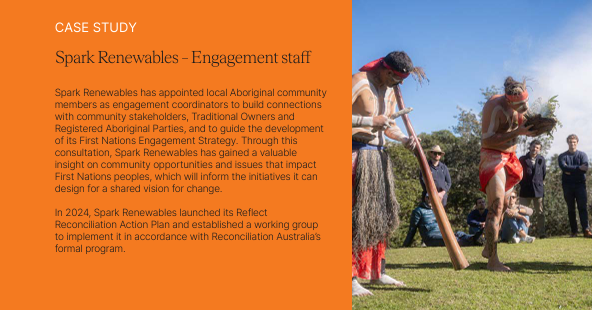
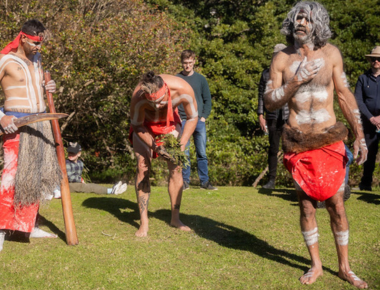
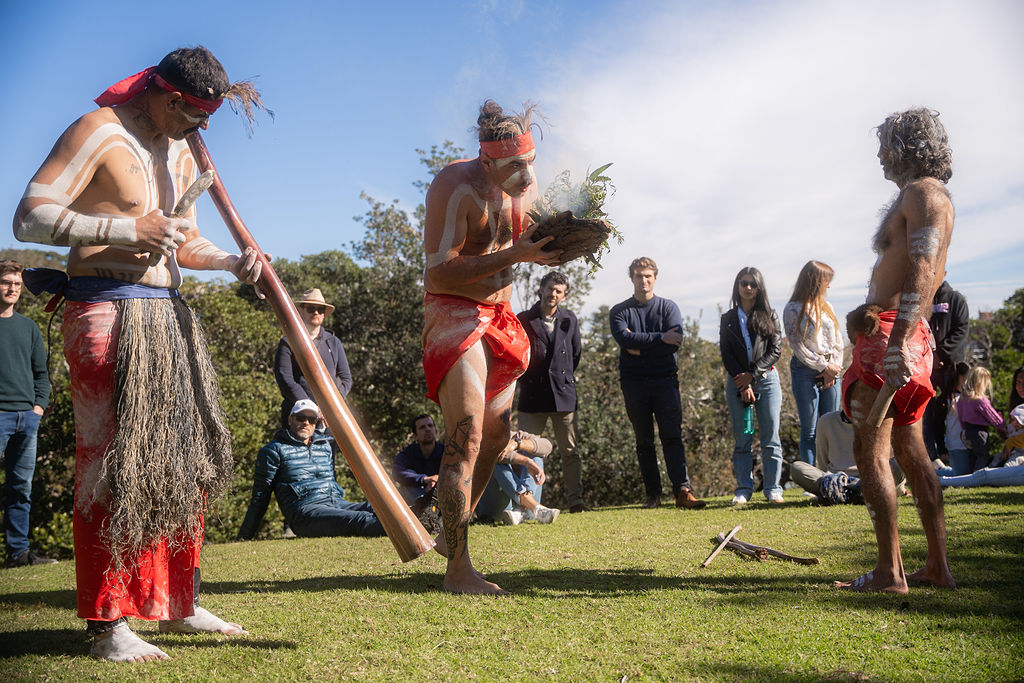
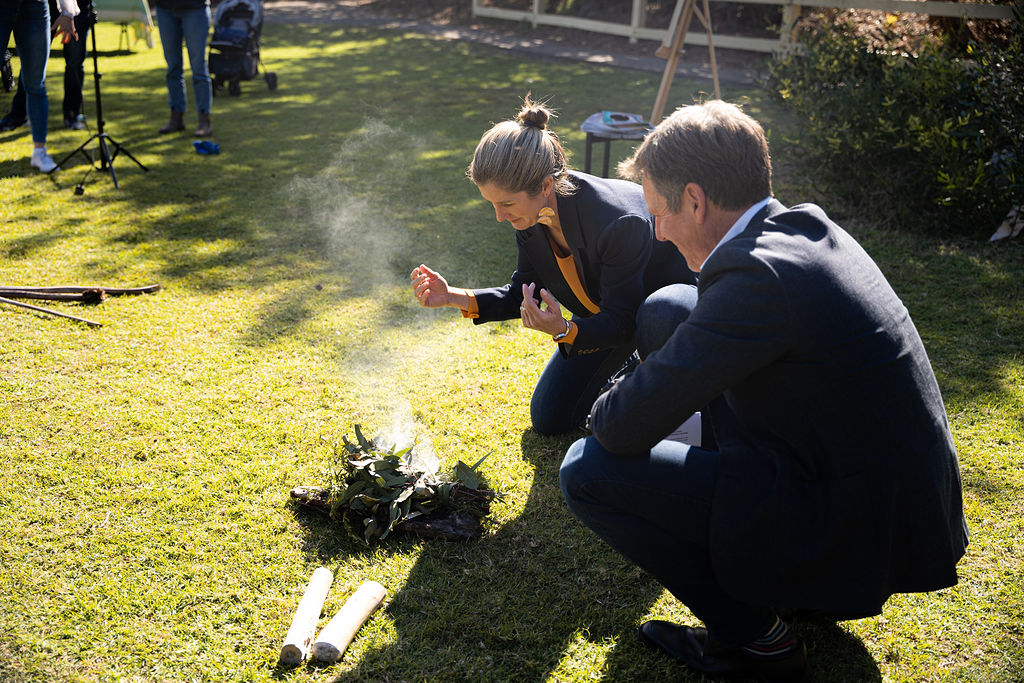
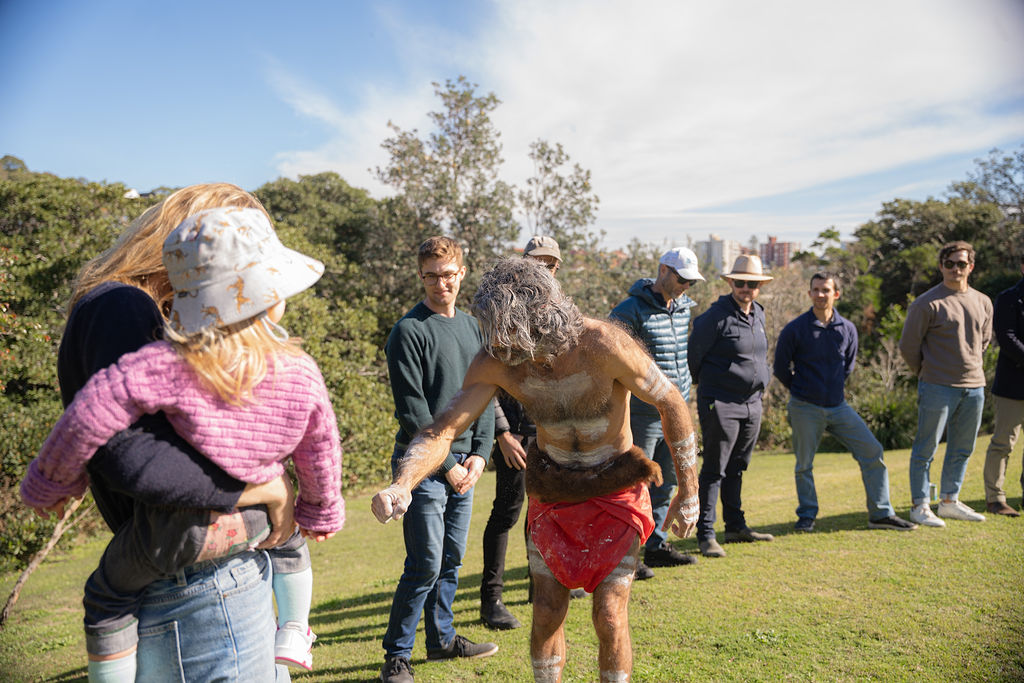
We were deeply honoured to have Leslie McLeod, a respected Yuin, Dharawal and Ngarigo Custodian and loreman, deliver a Welcome to Country for Spark Renewablesat our recent RAP launch, a significant milestone in our reconciliation journey.
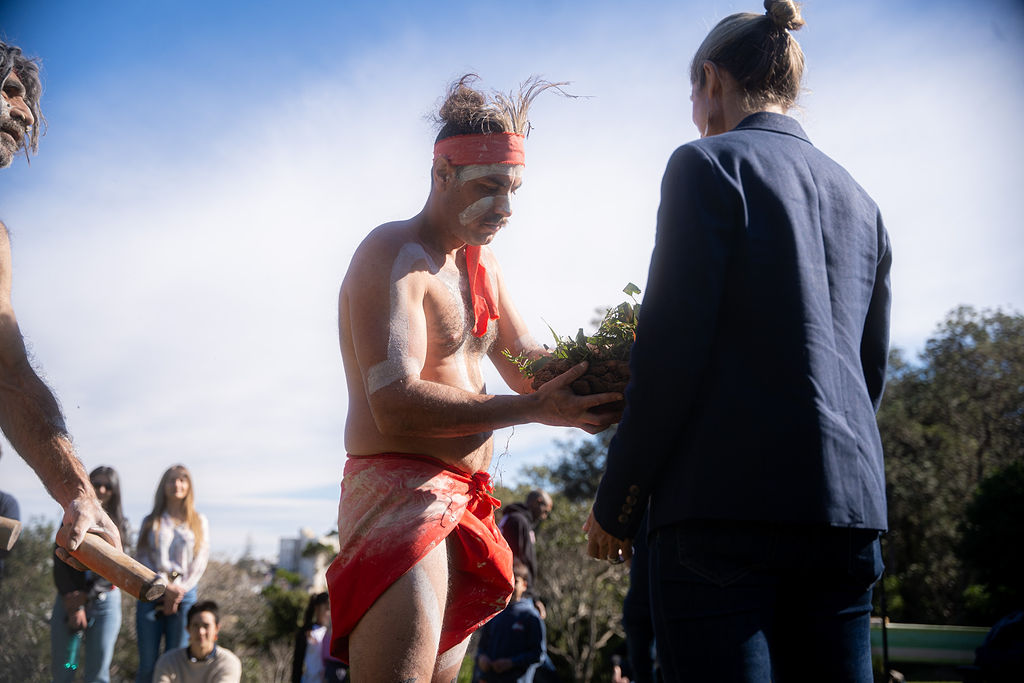
The Smoking Ceremony connected us deeply with the natural environment around us, allowing us to engage in spiritual and physical cleansing through this ancient tradition.
Understanding the significance of a Smoking Ceremony
A smoking ceremony is an ancient custom among Aboriginal communities, involving the smouldering of various native plants to produce smoke with cleansing, purifying properties, believed to ward off bad spirits. This tradition, one of the oldest ceremonies still performed today, has been practiced for centuries.
Depending on the occasion, these ceremonies serve multiple purposes, including healing, spiritual renewal, and strengthening, as well as marking significant life events such as births and mourning periods (known as Sorry Business). Additionally, they can be used to cleanse objects that have crossed cultural boundaries.
Both Indigenous and non-Indigenous individuals can request smoking ceremonies. However, due to their profound cultural significance, they are conducted only with the approval and guidance of Aboriginal and Torres Strait Islander communities, with careful consideration of the appropriate timing.
We took this opportunity to pay our respects to the land of the Cameragal people, where the Spark Renewables office stands, and where our team gathers each week.
Telling our story
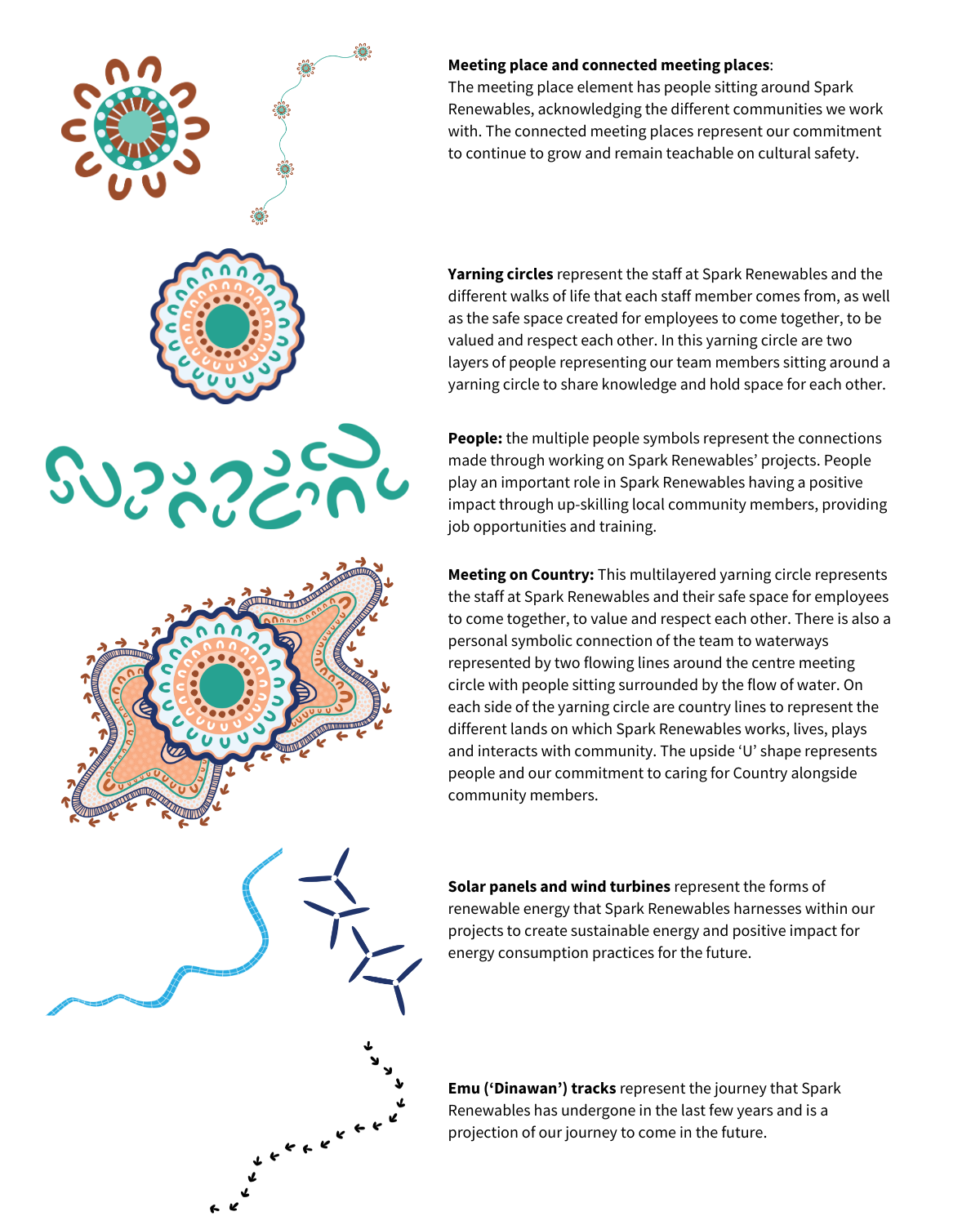
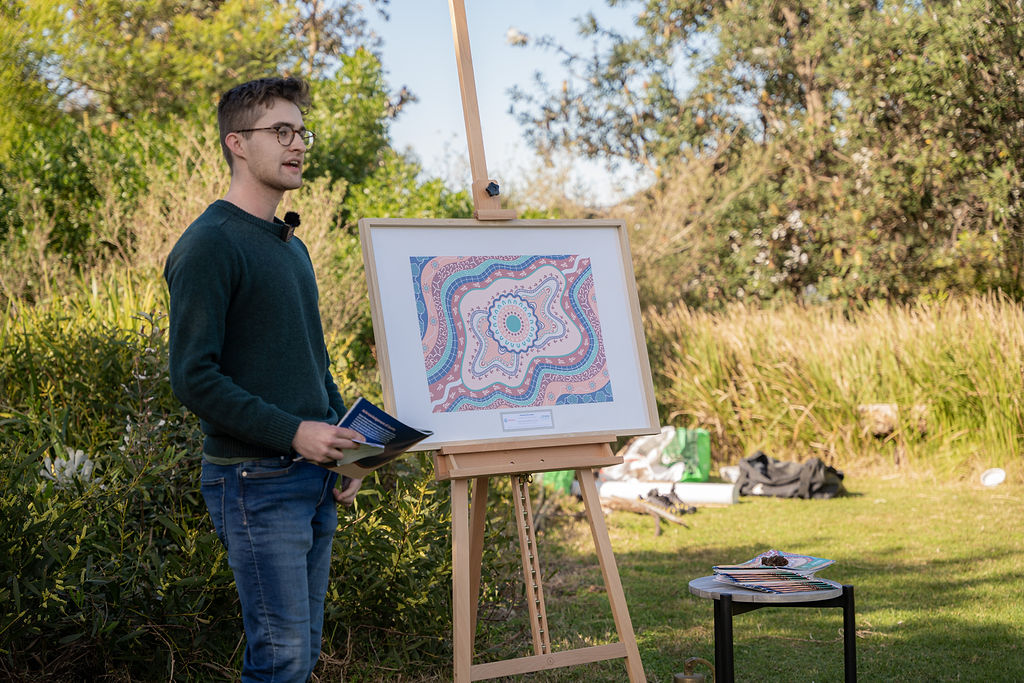
Our vision – to develop, own and operate renewable energy assets that lead the renewable energy transition in Australia – was beautifully represented in the Dhurga language, through the stunning RAP artwork created for us by the talented artists at Yirra Miya.
The artwork tells the story of Spark Renewables, where the colours represent our coastal head office and our inland development projects. The elements depict our role in working with local community members, learning from their knowledge and sharing expertise toward the development of renewable energy projects.
The connected yarning circles represent our commitment to continue to grow and remain teachable on cultural safety. The wind turbines and solar panels represent the energy forms we harness, while the emu ‘Dinawan’ tracks are a specific reference to our Dinawan Energy Hub. The people symbols represent the connections made through our projects.
These elements all come together in the final artwork; representing the sharing of knowledge, our growth journey, and acknowledgement of the land we work on, as being Aboriginal land.
Spark Renewables’ Reconciliation Action Plan coming together
We were fortunate to have Leslie McLeod perform this sacred ritual to mark the launch of Spark Renewables’ Reflect Reconciliation Action Plan. Crucially, our Reconciliation Action Plan includes content from every Spark Renewables employee, and has been strongly supported by the senior leadership team.
Reflecting on the process of reconciliation, Spark Renewables’ CEO, Anthony Marriner, said in the Reconciliation Action Plan:
“Coming from South Africa, the idea of reconciliation and respect for the Custodians of the land resonates very powerfully for me. There was much pain and suffering in South Africa until we went through the reconciliation process, which helped to heal the nation and empower the people.
Every person has the right to be treated with respect and kindness.
As I grow to understand Australia better, I can see that there is a need for reconciliation here as well, and that that desire is genuine and heartfelt. I am delighted that we can play a material role in this as it aligns directly with our values.
At Spark Renewables, we will be developing and constructing many wind, solar and battery projects over the coming years. We have always placed the community first and are proud to have established what is to our knowledge at the time of construction the largest solar farm community fund in Australia.
We acknowledge our obligation to ensure that we work closely with Aboriginal and Torres Strait Islander peoples and are always respectful of their land and their wonderful and rich cultures, which need to be preserved and cherished. In addition, we see an opportunity to make a massive positive difference to the lives of the communities that are impacted by our projects.
Our modus operandi is to make an on-the-ground impact in a way that is measurable and meaningful and focuses on those most in need – our ongoing support of the Girls at the Centre program at Mt Austin High School in Wagga Wagga, where over 40% of the students identify as Indigenous, is just one example of this.”
You can read more reflections on reconciliation from our team members here.
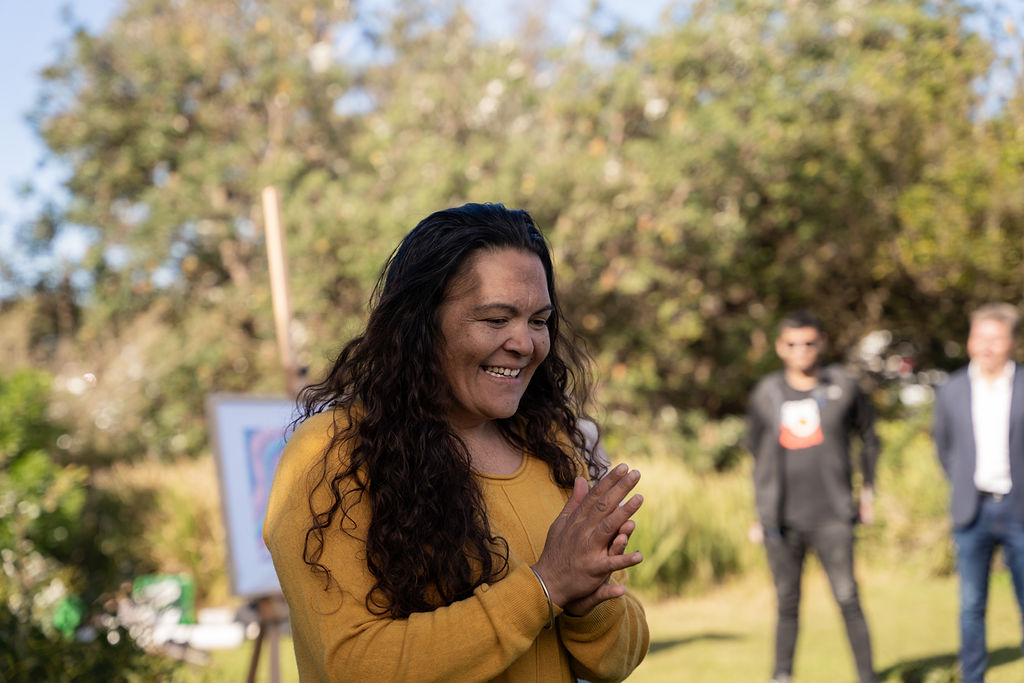
We are grateful to our Aboriginal Engagement Coordinator Shaurntae Lyons, whose guidance and encouragement have been instrumental in preparing our first Reconciliation Action Plan. Shaurntae plays a critical role in our engagement with First Nations communities and in developing inclusive partnerships with First Nations People and organisations across our renewable energy projects. She brings a deep cultural knowledge that supports the planning and implementation of all our projects and has helped to connect with communities at our Dinawan Energy Hub and Mallee Energy Hub.